
MLB Player Prop Types: Strikeouts, Home Runs, and Earned Runs
 Available in US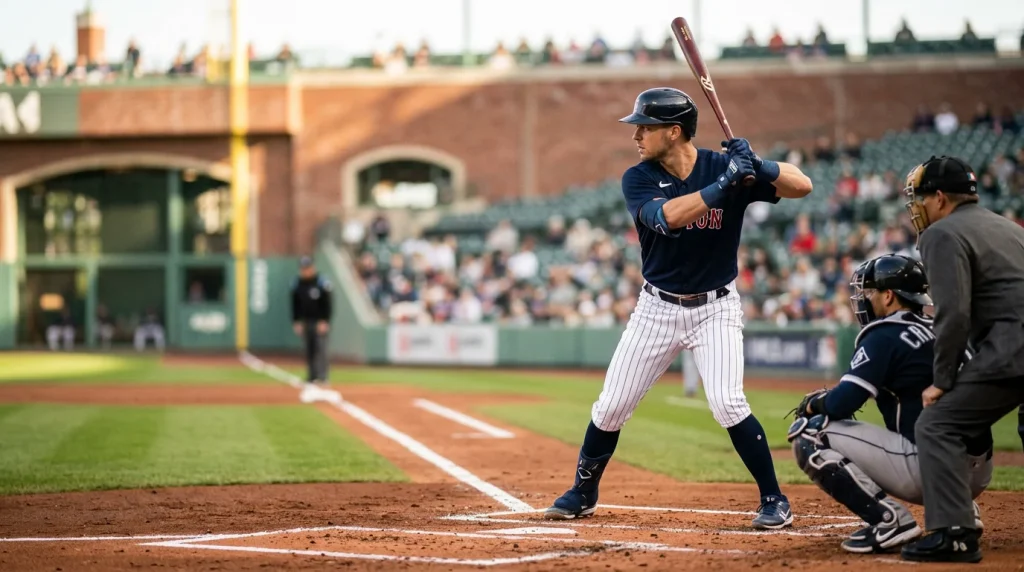
Evaluating Expanding MLB Player Prop Markets
Twelve years ago, the entire MLB prop menu at a typical sportsbook fit on one screen. You had moneyline, run line, totals, maybe a strikeout total on the headline starter, and that was it. Today’s menu does not fit on three screens, and the proliferation has happened faster on baseball than on any other US team sport — which is saying something given how aggressively the prop industry has expanded across the board.
The growth tracks with where the sport pays attention. MLB plays 2,430 regular-season games each year — thirty teams times 162 games divided by two — which is more than three times the NBA or NHL volume. That sheer schedule density gives trading desks endless opportunities to price props, and gives punters endless opportunities to find markets they understand or markets that look mispriced on a Tuesday in May. The obstacle is that if you do not know what each market actually settles on, you will eventually place a bet you misunderstand and lose money to a quirk you did not see in the rules.
This is a taxonomy piece. I am not going to tell you which prop type to back this season — that is what the strategy articles are for. What I will do is walk through every major MLB player prop category, explain what gets credited and what does not, flag the settlement quirks that catch punters out, and note where the UK bookmaker availability differs from US sportsbooks. There is a follow-up piece on MLB home run props strategy that goes deeper on the most popular single market once the basic mechanics are clear.
Batter props versus pitcher props — the fundamental split
Every MLB player prop falls on one side of a clean dividing line: it asks something about a batter or it asks something about a pitcher. The two halves of the market behave differently enough that I treat them as separate disciplines, even though many casual punters mix them in the same bet slip without thinking about the structural distinction.
Batter props are individual-event markets. The question is whether one specific player does one specific thing in his plate appearances during this game — hits at least one home run, records at least two hits, accumulates over 1.5 total bases, drives in at least one run. The bet settles on the box score outcome at the end of the game. The variance on batter props is famously enormous, because a typical batter gets only four or five plate appearances in a game, and the difference between zero and one home run is often a single swing on a single pitch.
Pitcher props are accumulation markets across innings. The question is what a starting pitcher’s line looks like at the moment he is pulled — strikeouts recorded, innings or outs completed, earned runs allowed, walks issued. The bet settles when the pitcher exits the game, which means the manager’s decision about when to pull the starter is as much a part of the bet as the pitcher’s actual performance. A pitcher striking out batters at a great rate but leaving after five innings can fail to clear a strikeout total a less effective pitcher might clear in seven. That dependency on outside-the-pitcher’s-control variables — manager hooks, pitch counts, bullpen freshness — makes pitcher props structurally different from batter props.
The implication for portfolio construction is that the two halves have different correlation structures. Two batters from the same lineup are correlated. A batter prop and the opposing pitcher prop are inversely correlated. UK same-game multi engines try to price these correlations into combined bets with mixed accuracy, which is why constructing same-game multis manually can give sharper punters an edge.
Home run props, the headline market
The home run prop is the market everyone wants to win and almost nobody wins consistently. It is also the prop type that most punters discover first, because the headline payouts are eye-catching and the binary nature — yes or no, did he hit a home run — makes the bet easy to follow during the game.
The price you see on a typical top-tier home run hitter sits in the +300 to +360 range in American odds, or 4.00 to 4.60 in decimal. That price is not arbitrary. It anchors to the historical baseline that even an elite slugger homers in roughly a quarter of his games. Vladimir Guerrero Jr. in his 2021 MVP-calibre season homered in 42 games out of 161, a 26% rate. That gives an implied probability ceiling of around 26% for the very top hitters, and the bookmaker’s price of around 22% implied (after margin) reflects that ceiling minus a couple of points for the desk’s edge.
What this means in practice is that the headline +300 to +360 price is not generous. It is approximately fair for an elite hitter in neutral conditions, and meaningfully unfavourable in unfavourable conditions. The factors that push the true probability above the implied price are pitcher-friendly to hitter-friendly park (fence height, dimensions, altitude), wind blowing out, hitter-favourable pitcher matchup (high fly-ball rates, weak against the hitter’s handedness), and confirmed lineup spot in the heart of the order. Push enough of those factors in your direction and the 22% implied price might genuinely correspond to a 28% real probability, which is where the edge appears.
The settlement of HR props is gloriously simple. The batter has to hit a home run during the game. Inside-the-park home runs count. Bombs over the wall count. Walks, hit-by-pitches, and fielder’s choice plays do not count, because they are not home runs. The category breaks down further into “first home run scorer” markets and aggregate “number of home runs” lines, but those are different beasts — the first-scorer market is fun and almost impossible to bet profitably given the variance.
Strikeout props, where pitchers earn or lose punters
Pitcher strikeout props are the largest pitcher prop market by volume on UK books, and the one where the most disciplined punters earn their keep. They are also where the gap between sharp analysis and casual punditry shows up most clearly.
The standard market is over/under a fractional total — 7.5 strikeouts, 8.5, 9.5, sometimes higher for the elite arms. The fractional total ensures no push outcomes; the bet either wins or loses outright. Both sides of the over/under typically price in the -110 to -120 American range, which is decimal 1.83 to 1.91 — implied probability of 52.36% to 54.64% on each side. That is the structural overround eating into the margin.
Beating this market requires reading the pitcher and the opposing lineup with more nuance than the topline strikeout total suggests. The factors I weight most heavily are the pitcher’s K% rate against the opposing lineup’s handedness, the swinging-strike rate (SwStr%) on his pitch arsenal, the called-strike-plus-whiff (CSW) percentage that captures how often he gets either a swing-and-miss or a called strike on each pitch, the projected pitch count given his recent workload, and whether the opposing lineup has unusual K-rate characteristics — patient hitters who walk a lot will shorten his outing, free-swinging hitters with high contact will let him work efficiently into the seventh.
The umpire matters more than people think. A wide strike-zone umpire benefits the over by giving the pitcher more called strikes and easier two-strike counts. A tight-zone umpire benefits the under. UK books rarely incorporate umpire data into their lines as efficiently as US books, which is one of the genuine UK-specific edge opportunities on this market — if the umpire is a known wide-zone caller and the line has not moved to reflect it, there is value to be found.
The settlement is straightforward. Strikeouts recorded during the pitcher’s appearance count. Strikeouts the bullpen records after he exits do not. A strikeout-throwing-error — where the batter reaches base on a third-strike wild pitch — still counts as a strikeout for stats purposes and therefore for prop settlement. The void rules around early exits are bookmaker-specific.
One historical reason strikeout props matter is that backtested prop modelling has shown they can be beaten with disciplined research. Dimers reported a 9.6% historical profit across 108 similar bets in their “outs recorded” backtest, and the strikeout market behaves similarly — both depend on pitcher quality, opposing lineup characteristics, and projected pitch count. Whether that translates to live profit for any individual punter depends on how systematically you can apply the framework.
Hits and singles — where settlement quirks bite
Hits props look simple. They are not quite as simple as they look, and the settlement quirks catch out more punters than any other prop category I can think of.
The standard market is over/under a fractional hit total — 0.5 hits (“1+ hits”), 1.5 hits (“2+ hits”), 2.5 hits (“3+ hits”). The 0.5 line is by far the most popular, partly because the implied probability of an everyday hitter recording at least one hit is high enough — typically 70% to 80% — that the market feels accessible to casual punters. The price on a 1+ hit market for a top-of-the-order regular is usually shorter than -200 American, which is decimal under 1.50.
What counts as a hit is the part that catches people. A clean single counts. A double counts. A triple counts. A home run counts as a hit (and as four total bases, which is a different prop entirely). What does not count is a walk, a hit-by-pitch, a sacrifice fly, a sacrifice bunt, a fielder’s choice, or — the killer — a reach on error. A batter who slaps a routine grounder to short, the shortstop boots it, the batter ends up on first, and the official scorer rules an error: that is not a hit, and your “1+ hits” prop loses if that was his only at-bat reaching base.
UK books defer to the official MLB scoring decision, which means a controversial scoring change after the game can shift the settlement of the bet several hours after the final out. I have had a “1+ hits” bet settle as a winner during the game and then settle as a loser the next morning when an official scorer downgraded a borderline play to an error.
The other settlement nuance is the at-bat that ends the game. If a batter’s only plate appearance ends in a walk-off win for the team batting in the bottom of the ninth, and the batter himself did not record a hit in any of his earlier at-bats, the prop loses. The walk-off win does not magically credit a hit to the batter.
The 2+ hits and 3+ hits markets are statistically much harder to clear. Going from 1+ hit at roughly 75% implied probability to 2+ hits at maybe 35% implied is not a linear extension — multiple hits require multiple successful at-bats, and the joint probability falls steeply. Pricing reflects that, with 2+ hits typically in the 2.50 to 3.50 decimal range and 3+ hits routinely above 8.00. These longer markets are higher-variance, lower-frequency bets that I treat as a separate category — closer in spirit to a futures play than to a 1+ hits prop.
Total bases — the slugging market in disguise
Total bases is the prop that quietly rewards punters who think about slugging rather than just batting average. It is also the prop where the difference between hits and bases starts to matter for analysis.
The market measures the bases recorded by a batter from his hits in a single game. A single is one base. A double is two. A triple is three. A home run is four. Walks, hit-by-pitches, errors, fielder’s choice, sacrifice plays — none of these contribute to total bases, because none of them are hits in the official scoring sense. The arithmetic is straightforward and the settlement quirks are the same as on the hits market.
The standard fractional totals are 1.5 total bases — meaning the batter needs at least 2 total bases, achievable through any combination of hits including a single double — and 2.5 total bases, meaning at least 3, achievable through a triple, a single plus a double, or a home run on its own. The 1.5 line is the most popular and most-liquid. Pricing typically lands in the same range as a 1+ hits prop for the same hitter, but slightly longer, because total bases requires either multiple hits or one extra-base hit, where 1+ hits requires only one of any kind.
The relationship between total bases and slugging percentage is direct. Slugging percentage is total bases divided by at-bats — the same denominator the prop bets on. A hitter with high slugging gets extra-base hits frequently, and the over 1.5 line favours that profile. A high-average, low-slugging singles hitter is well-priced for 1+ hits but poorly-priced for over 1.5 total bases, because the singles do not stack to the threshold.
The lineup spot effect is more pronounced on total bases than on hits, because lineup spot determines plate appearances and total bases markets reward accumulation. A leadoff hitter typically gets one more plate appearance per game than a number-six hitter, and that extra at-bat is the difference between a 35% probability and a 42% probability of clearing the over 1.5 line. The home run is the home-run-shaped tail of the distribution — a batter who hits a home run automatically clears any total bases line up to 3.5, which is what makes total bases the more reliable accumulator for power hitters with consistent lineup spots.
RBI props and the lineup-dependency problem
The RBI prop is the most lineup-dependent player prop in baseball, and that dependency is what makes it both interesting and frustrating to bet.
An RBI is a run batted in. The standard market is over/under 0.5 RBI — meaning the hitter needs to drive in at least one run during the game. The hitter can drive in runs through a hit (single, double, triple, home run), a sacrifice fly, a fielder’s choice that scores a runner, a walk with the bases loaded, or a hit-by-pitch with the bases loaded. He cannot get an RBI on an error play that scores a runner — the run is unearned and not credited to the batter.
What makes RBI props lineup-dependent is the obvious point that a hitter cannot drive in runs that are not on base. A leadoff hitter who comes up with the bases empty in his first at-bat has zero possible RBIs in that plate appearance unless he hits a home run. The middle-order hitters — the second through fifth slots — typically come up with more runners on base, and therefore have more RBI opportunities per plate appearance. A number-six hitter on a struggling team that does not get its leadoff and number-two hitters on base often will go entire games with no realistic RBI opportunities other than his own home runs.
The pricing reflects the lineup-dependency. A cleanup hitter on a high-scoring team is priced shorter on over 0.5 RBI than a leadoff hitter on a low-scoring team, even when their underlying offensive ability is similar. The reason is opportunity, not ability. UK books incorporate the lineup spot into their pricing, but the adjustment is sometimes slower than I would expect — particularly when a hitter is moved up in the order due to injury and the bookmaker’s price has not yet adjusted to the new context.
The hidden factor is the pitcher’s runners-in-scoring-position (RISP) profile. Some pitchers are dramatically worse with runners on base than they are with the bases empty — usually because they shorten their delivery to control the running game and lose movement on their pitches. UK books rarely price this directly, which is one of the angles I look at when evaluating an RBI prop seriously. The variance on RBI props is wider than on hits or total bases, because driving in runs requires both a hit-or-walk-with-runners-loaded outcome and the right lineup context. Treat RBI props as longer-term volatile holdings rather than as steady accumulators.
Stolen bases and the running game in the post-2023 rules
Stolen base props were a niche market until 2023, when MLB’s rule changes — larger bases, the pitch clock, and limits on pickoff attempts — produced an immediate surge in successful steals across the league. The market caught up faster than the line-pricing did, which created a window of edge that has since narrowed but still exists in pockets.
The standard market is over/under 0.5 stolen bases on a specific hitter — meaning at least one successful steal during the game. The pricing on the over for a top base-stealer typically lands somewhere between 2.50 and 4.00 in decimal, depending on the matchup. The under is usually shorter, reflecting that even elite base-stealers fail to steal in most individual games.
The factors that move the price are the runner’s sprint speed (the Statcast metric measuring his top running speed in feet per second), the catcher’s pop time (how quickly the catcher gets the ball from glove to second base on a stolen base attempt), the pitcher’s delivery time to home plate, the lineup spot (a number-nine hitter does not steal because he rarely reaches base), and the game script (a tight game in the late innings creates incentive to steal; a 9-2 lead does not). UK books generally price the obvious factors — speed and matchup — but the game-script adjustment is harder to bake in pre-game.
What MLB’s 2023 rule changes did was systemically increase the per-attempt success rate of stolen bases, because the larger bases mean a slightly shorter distance to cover and the limits on pickoff attempts mean baserunners can get bigger leads with less risk. Leaguewide stolen base totals in 2023 were the highest in two decades, and 2024 and 2025 stayed near those elevated levels. Pricing has adjusted, but unevenly — some baserunners’ over 0.5 prices remain too long given the new run-environment, particularly during the early weeks of the season before the trading desks recalibrate.
UK book availability on stolen base props is patchy. Bet365 carries them on confirmed lineups for known basestealers. Sky Bet and Paddy Power offer them less consistently. William Hill rarely posts standalone stolen base markets. The settlement is straightforward: a successful stolen base credited to the batter in the official MLB box score counts. Caught-stealing attempts do not. A defensive indifference call, where the catcher simply does not throw because the game situation makes the run irrelevant, is officially scored as a stolen base in the modern rule, so it counts.
Outs recorded and earned runs allowed
The two least-glamorous pitcher props are the two I trust most. Outs recorded and earned runs allowed are accumulation markets that depend on a combination of pitcher quality, manager decisions, and lineup context, and they reward serious analysis in a way that the pure-skill markets do not.
The outs recorded prop is over/under a fractional total — typically 16.5, 17.5, or 18.5 outs for a quality starter, equating to 5.2, 5.5 and 6.0 innings respectively. (A reminder for newer punters: an inning is three outs, so 16.5 outs is five-and-a-half innings.) The over wins if the pitcher records at least the next half-out beyond the line. The under wins if he is pulled before reaching that threshold.
What this market really prices is the manager’s decision-making more than the pitcher’s pure performance. A pitcher throwing a perfect game through five innings will still be pulled in the sixth if his pitch count is at 105 and the manager wants to protect him for the playoff race. The factors I weight are the pitcher’s average innings per start over the recent rolling window, the manager’s hook tendencies, the bullpen’s recent workload, the projected pitch count, and the score situation that is most likely to develop. UK books price most of this competently, but the bullpen workload is the variable I see most often missed.
Earned runs allowed is the inverse-quality market. The standard is over/under 1.5 or 2.5 earned runs allowed during the pitcher’s start. Earned runs are runs that score without the assistance of an error or passed ball. Unearned runs do not count toward the prop, which is why the official scorer’s calls on errors-versus-hits matter even on a pitcher prop. The deeper analytical metrics — FIP and xERA — are more predictive than raw ERA for short-window outcomes, but those are a topic of their own.
Both markets share the same void rules around early exits, which vary by bookmaker. Bet365’s lenient rule of “stands if at least one batter faced” can produce ugly losses on outs-recorded props if a pitcher leaves after one out due to injury — your over 16.5 outs bet is a definite loser at one out faced.
How prop availability differs between UK and US books
The casual UK punter who watches American sportsbook content sometimes assumes that the prop menu they see at FanDuel, DraftKings or BetMGM is what they will find at Bet365 or Sky Bet. They are then surprised when half the markets they were planning to bet are simply not posted on the UK side.
The structural reason is that MLB has a multi-year partnership with FanDuel as an Authorised Gaming Operator since March 2023, which gives FanDuel and the Flutter group product templates and data feeds that competing operators do not get. That benefits Sky Bet and Paddy Power indirectly. It does not benefit Bet365 or William Hill, both of which build their MLB products independently. Some markets — particularly novelty props like “first home run scorer” or specific quirky combinations — appear on the FanDuel-aligned books and not elsewhere.
The deeper structural difference is volume. American sportsbooks see ten times the MLB betting handle of UK books, which means their trading desks can justify pricing markets that simply do not generate enough turnover at UK operators. The “exact total bases” market exists at most US sportsbooks and rarely at UK ones. The “first inning” prop bundle is much deeper in the US.
What UK books do carry consistently are the volume markets: home runs, hits, total bases, RBI, strikeouts, outs recorded, earned runs allowed. These exist at all four major UK operators with reasonable depth. Below that tier, the patchwork begins — and the absence of certain markets at UK books is not a failing so much as a rational response to the underlying handle. The 80/20 reality is that 80% of US-discussed prop markets exist in some form at UK books, and the missing 20% is mostly novelty stuff that the analytical sharps were not betting heavily anyway.
FAQ
What to do with this taxonomy
The taxonomy I have walked through is the foundation, not the strategy. Knowing what each prop type is, what counts and what does not, and where the settlement quirks live, is the prerequisite for any deeper analytical work. Without that foundation, the analytical work is built on a shaky reading of the underlying market, and the gaps will show up as losing bets rather than as obvious blind spots.
The bigger context is that MLB is becoming a real betting market in the UK rather than a niche curiosity. Chris Marinak, MLB’s chief operations and strategy officer, has been clear that the league sees the UK as a priority market for international growth — which means more analytical content, more product investment, more visible promotional pushes from the books. The punters arriving at this market for the first time over the next two seasons will need exactly the kind of taxonomy this piece lays out.
What I would carry forward into your actual betting practice: pick the prop categories you understand best, learn the settlement rules cold, and ignore the novelty markets until you have a clear edge thesis on the volume markets. Building expertise in one prop type — strikeouts, total bases, outs recorded — is more valuable than spreading bets across all eight categories on every game. The 162-game season rewards depth over breadth.
BasePropPro Articles: MLB Prop Bets Strategies
MLB Prop Hold Percentage: Calculating UK Bookmaker Margins
Identifying High Hold Percentages on MLB Props I had a stretch a few years back where I was confident I had found genuine edge on a hits prop market. The…
MLB Pitcher Charges: Prop Manipulation and Market Integrity
Recognizing Integrity Signals in MLB Prop Markets I was running my normal…
UKGC Rules 2026: Statutory Levy and MLB Betting Regulations
UKGC Affordability Checks and MLB Betting Impact Most punters do not want…
MLB Same-Game Parlays: Correlated Legs and Pricing Strategies
Identifying Correlated Legs for MLB Parlays Same-game parlays are sold as the…
Prepared by the BasePropPro editorial staff.
