
NRFI Props: No Run First Inning Pitcher Strategies
 Available in US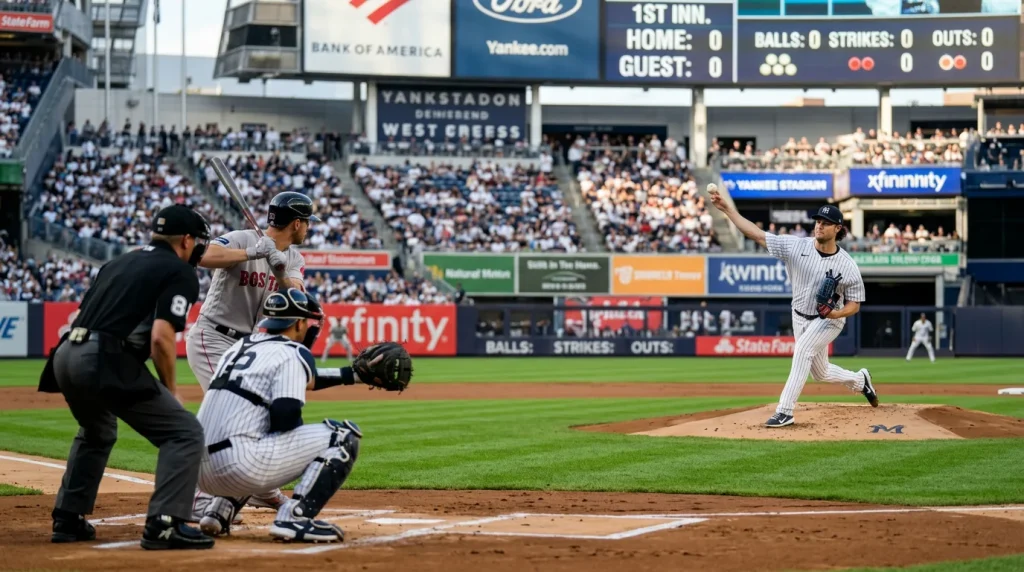
Evaluating Top-of-the-Order Risks for NRFI Bets
About five years into modelling MLB props, I noticed something strange in my own ledger. I was beating the moneyline on roughly the rate I expected, losing slightly on totals, and quietly making most of my profit in one market I had treated as a sideshow: the No Run First Inning bet. That bothered me. If something is making you money, you should know exactly why, otherwise you are one variance run away from convincing yourself the edge has gone.
NRFI is a bet that no run will be scored in the top or the bottom of the first inning. That is it. Three outs, three outs, scoreboard still reads zero, you collect. The flip side, YRFI, pays when at least one team plates a run before the second inning starts. The market sounds binary and small, but it gets surprisingly nuanced once you start unpicking it, and that is what kept me coming back.
For UK punters this is a tidy little market for another reason. It resolves in the first 15 to 20 minutes of an MLB game, which means you can place a stake at 11pm British time, watch the openers warm up, and be tucked up in bed before midnight knowing the result. Across a 162-game regular season that produces 2,430 individual matches, the volume is enormous, and the line moves on a much narrower set of variables than a full-game total.
How the NRFI Market Actually Settles
Here is a question I get asked constantly: does NRFI cover both halves of the first inning, or just one? Both. If the away side scores in the top half, your NRFI is dead before the home pitcher has thrown a ball. If the home team scratches one across in the bottom of the first, same deal. To win, you need a clean frame on both sides. That is what makes it harder than it sounds and why the price tends to sit around even money on most matchups, drifting to short prices on elite pitcher duels and into plus territory when bullpens are shaky or the weather is friendly to the bat.
UK books typically offer it as a standalone market labelled “No Run in the 1st Innings” or “First Innings Total Goals Under 0.5”. Neither label is universal, and you will see it tucked into a “Specials” tab on some platforms and right alongside the main markets on others. Settlement rules matter. If the game is suspended after the top of the first with the away team scoreless and never resumes, most UK operators void the bet rather than settle it. Always read the rules tab before you stake anything material – this is where casual bettors get burned.
The bet ignores everything that comes later. A starter giving up six runs in the third does not affect your NRFI ticket; you have already been paid. That isolation is what makes NRFI a clean tactical wager. You do not need to model the full game, just the first three outs of each side.
Picking the Pitcher Pair That Holds the Frame
The first thing I look at is not strikeout rate. It is not even FIP. It is first-inning splits over the past two seasons. Some pitchers are slow starters who routinely walk the leadoff man, others come out firing and rarely give up a first-inning run regardless of the opposition. There is a real, durable signal in the splits, and most casual bettors never look.
The second filter is recent form. A pitcher who has thrown six straight scoreless first innings tells you nothing on its own – small sample noise – but combined with strong career splits and a favourable matchup, it becomes a confidence multiplier. The third filter is opposition lineup quality, and specifically the top three hitters. NRFI is decided almost entirely by who comes to the plate in the first inning, and that is the top of the order. If the leadoff man has a .400 on-base percentage against the pitcher’s handedness, your edge is gone before first pitch.
I also check ballpark. A pitcher’s duel scheduled at a hitter-friendly venue carries different risk to the same pair at a pitcher’s park. T-Mobile Park in Seattle ranks ninth in MLB for the lowest fences and second for shortest right field, which makes it a quietly favourable park for left-handed home runs. Those structural facts shift the NRFI baseline by a percentage point or two, which is exactly the size of edge you are looking for. Read more on the structural side in the park factors guide.
The Top of the Order Is Where the Bet Is Won or Lost
I keep coming back to this because I think it is the single most underweighted variable. Whatever the pitcher’s reputation, the first inning will feature, on average, four batters, and three of them will be the team’s best hitters by design. You are not betting against a generic offence; you are betting against the leadoff hitter, the two-hole hitter, and the three-hole hitter, in that exact order, both teams.
That has knock-on implications. A pitcher who carries a 2.50 ERA but has been tagged repeatedly by left-handed leadoff men, facing a lineup with a left-handed leadoff man, is a worse NRFI bet than the raw numbers suggest. Conversely, a pitcher with mediocre overall numbers who has historically owned right-handed top-of-order hitters is a sneaky NRFI play against a right-handed-heavy team. This is the kind of detail that does not show up in the headline number on a UK bet slip, and it is exactly where the edge lives.
One more wrinkle: late lineup changes. A scratch at the top of the order – fatigue, a tweak in batting practice – can rewrite the calculus completely. UK books usually do not void NRFI props on lineup changes the way they might void a single-player prop, so you wear the consequences. That is why I rarely lock in a stake before lineups are confirmed, and even then I am watching for late changes within an hour of first pitch.
Where the Edge Sits Between NRFI and YRFI
Across a long sample, NRFI and YRFI should be priced symmetrically around the true rate, with the bookmaker margin baked in. In practice, they are not. Casual money tends to flow toward action – and YRFI is the action side, because punters want to see a run, not a quiet half-inning. That public bias means NRFI is more often the side carrying value, particularly in marquee matchups where the public is loaded onto the run-friendly side.
Roughly 30 per cent of MLB games end with a one-run margin, which tells you indirectly how tight scoring tends to be at the top end of the league. Tight games are usually tight from the start, and that pushes the true NRFI rate higher than a casual punter would guess. The market knows this on average, but it overreacts to high-profile offensive matchups and underreacts to quiet pitcher duels between non-marquee names. The edge is rarely huge – a percentage point or two of expected value at most – but compound that across hundreds of plays per season and the maths becomes very compelling. The principles for translating that into actual returns are the same ones I cover in the pitcher metrics piece, which is where I source most of my first-inning baselines.
One trap to avoid: do not parlay NRFI into anything more complicated than two-leg combos until you have tracked your own results for at least a season. The correlation between an NRFI in game A and game B is essentially zero, but the correlation inside a single game between NRFI and the under on the full-game total is real and positive. Books price that correlation in, so a parlay of NRFI plus under on the same game returns less than the pure mathematical multiplication of the two prices. Punters who do not realise this are leaving money on the table, but they are also paying a hidden tax for a bet they could place cheaper as two singles.
What I Would Tell a Punter Reading This for the First Time
NRFI is not a get-rich market. It is a get-disciplined market. The price moves on a small set of clearly identifiable variables – pitcher first-inning splits, top-of-order quality, ballpark structure, weather – and that means you can build a checklist and stick to it. The discipline is the edge. Most punters skim the headline pitcher names, glance at the price, and stake. The ones who win consistently dig into the splits, watch lineups, and only stake when their checklist clears.
If you take one thing from this, take the lineup point. Watch where the top three hitters bat, what hand they swing from, and how they have done against the pitcher’s profile. That single habit will lift your NRFI win rate further than any model I have ever built.
BasePropPro Articles: MLB Prop Bets Strategies
MLB First 5 Innings (F5) Bets: Targeting Starter-Driven Moneylines
Isolating Starting Pitcher Edges in F5 Moneylines The first time someone explained the F5 market to me, I did not understand why I would ever bet a partial game when…
MLB Pitcher Charges: Prop Manipulation and Market Integrity
Recognizing Integrity Signals in MLB Prop Markets I was running my normal…
MLB Bankroll Management: Staking Tactics for the 162-Game Season
Unit Sizing and Drawdown Survival for MLB Seasons I have watched more…
MLB UK Start Times: Time-Zone Schedules for Punters
Optimizing Betting Schedules Around First Pitch Times The Dodgers play a Tuesday-night…
Created by the "BasePropPro" editorial team.
