
MLB Run Line vs Handicap: Pricing Alternate Betting Lines
 Available in US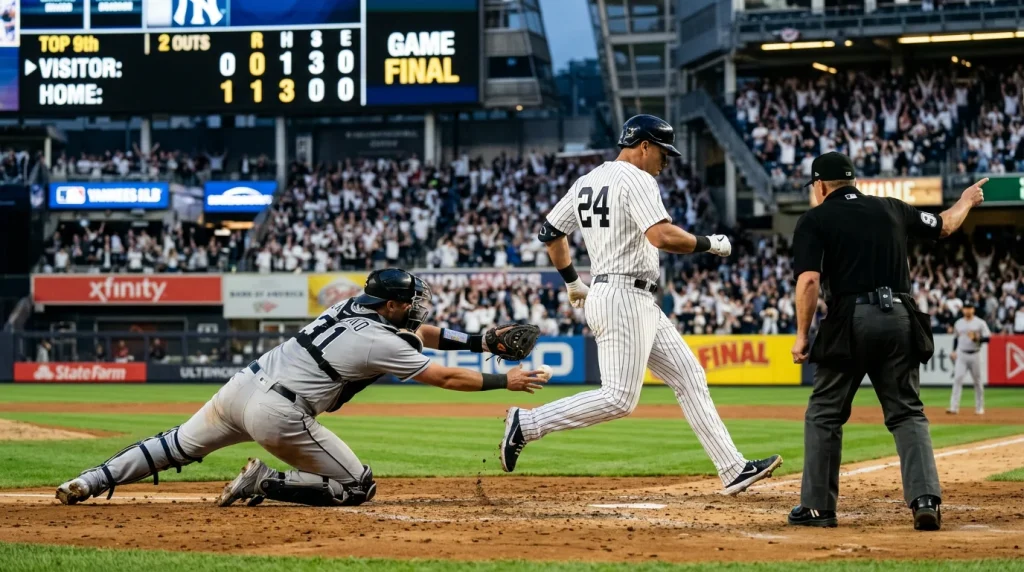
Evaluating the 1.5-Run Default in Handicap Betting
I have lost more tickets to a 1-run margin than to any other type of MLB result. The match goes my way, the team I backed wins, and I lose because they won by exactly one run instead of two. The structural fact that powers the run line market is also the fact that frustrates everyone who bets it: roughly 30 per cent of MLB matches end inside a single run. The run line – typically minus or plus 1.5 runs – is built around that distribution, and it pays differently from a moneyline because of it.
Betting the run line is not betting on a different outcome from the moneyline. It is betting on the same outcome with a different point of resolution. You are no longer asking “did this team win?” You are asking “did this team win by more than one run, or did they cover the spread by losing within one run?” That second question has a very different probability profile from the first, and the price reflects that. This piece is about how to read run line markets, when they are structurally cheap, and when they are a trap.
The Math of the One-Run Game
A team’s win probability and its run-line cover probability are not the same. A favourite that wins 60 per cent of its matches will not cover the minus-1.5 line in 60 per cent of those matches, because some of those wins are by exactly one run. The structural slip is significant – across MLB the favourite that wins by one run constitutes a meaningful share of all favourite wins, and the cover probability runs roughly 10 to 15 percentage points below the win probability on most matches.
The mechanism is straightforward. Out of the 2,430 regular-season matches, roughly 30 per cent finish with a 1-run differential. If the favourite is winning a typical match 55 per cent of the time, and roughly half of those wins are by exactly one run, then the favourite’s cover rate at minus 1.5 is closer to 40 per cent. The price on the favourite at the run line reflects this – minus odds on the moneyline becomes plus odds on the run line, sometimes substantially. The plus payout is not free money. It is structurally tied to the lower probability of covering.
Conversely, the underdog at plus 1.5 is winning a higher share of matches than the underdog moneyline suggests. The underdog wins outright in only 45 per cent of matches in the example above, but it covers plus 1.5 in roughly 60 per cent of matches because the plus 1.5 line includes both outright underdog wins and underdog losses by exactly one run. The price on the underdog at plus 1.5 is correspondingly tighter – a plus-money moneyline becomes minus-money at plus 1.5.
When the Favourite at Minus 1.5 Is Actually Cheap
The structural answer to “when is the favourite at minus 1.5 cheap?” is when the underlying matchup produces lopsided run distributions rather than narrow ones. Three conditions push the favourite cover rate above the structural baseline: an elite starter facing a thin offensive lineup; a deep favourite bullpen that suppresses late-inning underdog runs; and a high projected total that creates more room for margin to develop.
The elite-starter-against-thin-lineup match is the cleanest case. The favourite is not just more likely to win – they are more likely to win by margin, because the elite starter shuts down scoring at a rate that compounds the offensive advantage. The casual run line price still reflects roughly the league-average cover rate, which is too pessimistic for the structurally lopsided matchup. Backing minus 1.5 in those matches is structurally cheap.
The deep-bullpen condition adds to the cover probability because the favourite that is up by one or two runs in the seventh is structurally more likely to extend the lead than to give it back when the bullpen is rested and elite. The casual market processes the starter quality more than the bullpen quality, so the run-line price on the favourite with a deep bullpen lags the structural cover rate.
The high-total condition is more subtle. In a projected 9.5-run match the favourite has more room to run up the score and reach a 2+ run margin. In a projected 6.5-run match the same favourite has structurally less room because the total runs are limited. The run line on the favourite in the high-total match is therefore structurally more likely to cover, even when the win probability is identical to the low-total match.
When the Underdog at Plus 1.5 Is Actually Cheap
The plus-1.5 underdog is structurally cheap when the match has high one-run-game probability. The same conditions that make a one-run game more likely – two strong starters, deep bullpens on both sides, low projected total – increase the plus 1.5 cover rate. Across MLB the matches with the highest one-run rate are the matches between two pitcher-led teams in pitcher-friendly parks, where the structural run-scoring distribution is narrow and the margin of victory is rarely more than a run.
Wrigley Field offers the structural example. The park ranks 28th in run-scoring with deep right-field dimensions and tall fences, which compresses the run-scoring distribution and produces a higher rate of one-run finishes. The underdog at plus 1.5 in a Wrigley match in calm air is structurally cheap relative to the same underdog at a hitter-friendly park, because the lower-total environment creates more one-run finishes for the plus 1.5 to absorb.
T-Mobile Park offers a more nuanced case. The park ranks 9th lowest in fence height with the second shortest right field, which makes it favourable for left-handed home runs and ranks it 6th in left-handed HR production. That structural HR profile produces a wider run-scoring distribution than Wrigley, which means the one-run game rate is structurally lower at T-Mobile and the plus 1.5 underdog is correspondingly less cheap there than at Wrigley. The same underdog at the same moneyline price has different run-line value at the two parks because the underlying run-scoring distribution differs.
The Reverse Run Line and Where It Lives in the Market
The reverse run line – taking the favourite at plus 1.5 instead of minus 1.5 – is a UK market with structural value in specific spots. The favourite at plus 1.5 is essentially betting that the favourite either wins or loses by exactly one run, which is a much higher probability than winning outright. The price on the favourite at plus 1.5 is heavily into minus odds, often very heavily, because the cover probability runs above 80 per cent on most matches.
The reverse run line pays structurally well in matches where the favourite has a high win probability and a reasonable underdog cover probability – that is, matches where the moneyline favourite is solid but the one-run-game rate is also elevated. A pitcher-driven match between two strong teams where the favourite is favoured but not heavily so is the typical setup. The trap with the reverse run line is the heavily-favoured match: at minus 600 or worse, each loss is six times the size of a win, and the variance is structurally heavy. The reverse run line on heavy favourites is a low-variance churn-the-bankroll product that requires very large samples to converge.
The Run Line in F5 Markets
The F5 market – first five innings – has its own run line, usually a 0.5-run line rather than a 1.5-run line. The structural reason is that the F5 segment produces tighter score distributions than the full game. Most F5 segments end with a margin of zero, one, or two runs, so books offer the 0.5 line to create a meaningful spread bet on the segment.
The F5 run line at 0.5 functions like a moneyline with a half-run cushion – the favourite at minus 0.5 wins if they are ahead at any margin through five, and the underdog at plus 0.5 wins if they are tied or ahead through five. Roughly 12 to 15 per cent of F5 segments end tied, which is the structural reason the 0.5 F5 line exists and the source of the price differential between the F5 moneyline and the F5 run line.
Sequencing the Run Line With Other Products on the Slate
The run line is most useful as a complement to other markets rather than as a stand-alone product. On a typical slate I will look at the moneyline, the run line, the F5 markets, and the team total alongside each other for the same match, because the four prices share underlying assumptions and the gaps between them tell you what the market is implying about the run distribution.
If the moneyline is heavily favouring one side but the run line price is barely better than even, the market is implying high one-run-game probability – the favourite wins often but rarely by margin. That is a low-total, pitcher-driven match read, and it cross-checks against the team total being low. If the moneyline is mildly favouring one side but the run line price is heavily plus odds, the market is implying that this match is essentially a coin flip with margin variance – which is a high-total, lineup-driven match read, cross-checking against the team total being high.
The cross-check between the four products is the discipline that turns single-market betting into informed-product betting. When the cross-check is consistent across the four markets, the underlying read is solid and the structural pricing is fair. When the cross-check shows inconsistency between two products on the same match – say, the run line implies high one-run probability but the team total implies high run-scoring – one of the two products is mispriced. Identifying which one is the work that turns the four-market read into a structural edge. The line shopping that protects the structural margin on each ticket is covered in the line shopping piece, and the same discipline applies sharpest on the run-line market where the price spreads across UK books are wider than the moneyline spreads.
BasePropPro Articles: MLB Prop Bets Strategies
Watch MLB in the UK: TNT Sports, MLB.tv, and Free Broadcasts
UK Punter MLB Broadcasting Options for March I get the same question from new MLB-curious punters every spring. They have heard about prop bets, they want to learn the sport…
NRFI Props: No Run First Inning Pitcher Strategies
Evaluating Top-of-the-Order Risks for NRFI Bets About five years into modelling MLB…
MLB Prop Hold Percentage: Calculating UK Bookmaker Margins
Identifying High Hold Percentages on MLB Props I had a stretch a…
MLB Platoon Splits: Lefty-Righty Matchups and Betting Odds
Exploiting Platoon Splits for Batter Prop Value Years ago I had a…
Written by the editors at BasePropPro.
